· AR · 5 min read
Markerless AR: how augmented reality finally broke free from markers
Markerless augmented reality marks a major shift from staged, marker-based experiences to natural, immersive interactions by allowing digital content to appear directly in real-world spaces without printed targets. Using cameras, sensors, depth data, and learning-based tracking, markerless AR understands environments, tracks movement, and keeps virtual objects stable as users move, making experiences feel fluid and realistic. Now common on mobile devices and the web, it powers everyday use cases like virtual furniture placement, try-ons, education, gaming, and industrial training, while advanced platforms and headsets push spatial mapping even further. As AI and hardware continue to improve, markerless AR has moved from experimental to standard, redefining how digital content blends seamlessly into physical reality.
For a long time, augmented reality felt a little… staged. You had to scan a black-and-white symbol, point your camera at a printed image, or line everything up perfectly just to see something virtual appear. That approach worked, but it never felt natural.
That changed with markerless AR.
Today, markerless augmented reality allows digital content to appear directly in the real world—on floors, walls, tables, and even in open space—without relying on visual markers. This shift from marker-based systems to augmented reality markerless technology has completely transformed how people experience AR.
What Is Markerless Augmented Reality?
So, what is markerless augmented reality in simple terms?
It is a form of non-marker based augmented reality where the system understands the physical environment instead of waiting for a marker. Using cameras, motion sensors, and depth data, ar markerless systems detect surfaces, track movement, and place virtual objects exactly where they belong.
You may also see it written as augmented reality markerless, markerless ar, or markerless based augmented reality—all referring to the same idea: AR without printed targets.
Marker Based and Markerless Augmented Reality: Why the Difference Matters
To really understand the impact of this shift, it helps to compare marker based and markerless augmented reality.
Marker-based AR depends on a visible image. Lose sight of the marker, and the AR object disappears. Markerless AR does the opposite—it reads the world itself.
That’s why the debate around markerless versus marker based AR usually comes down to realism. Markerless systems feel more fluid, more intuitive, and far closer to how humans actually see and interact with space.
How Does Markerless AR Work?
People often ask, how does markerless AR work, or more specifically, how does markerless augmented reality work?
At a high level, markerless AR relies on:
- Environmental understanding
- Motion and depth tracking
- Real-time camera analysis
One of the key techniques involved is markerless pose tracking for augmented reality, which helps the system understand the device’s position and orientation. Combined with augmented reality markerless tracking point detection, the AR content stays stable—even as you move.
Markerless Tracking for Augmented Reality
At the heart of markerless AR is tracking.
Markerless tracking augmented reality allows virtual objects to stay locked to real-world locations. Modern systems use a combination of computer vision and machine learning, often described as:
- Markerless tracking for augmented reality
- Markerless tracking for mobile augmented reality
- Markerless tracking for AR a learning based approach
- Markerless tracking for AR a learning-based approach
- Markerless tracking for augmented reality a learning based approach
These learning-based approaches improve over time, making AR experiences smoother, more accurate, and more reliable.
Markerless AR on Mobile Devices
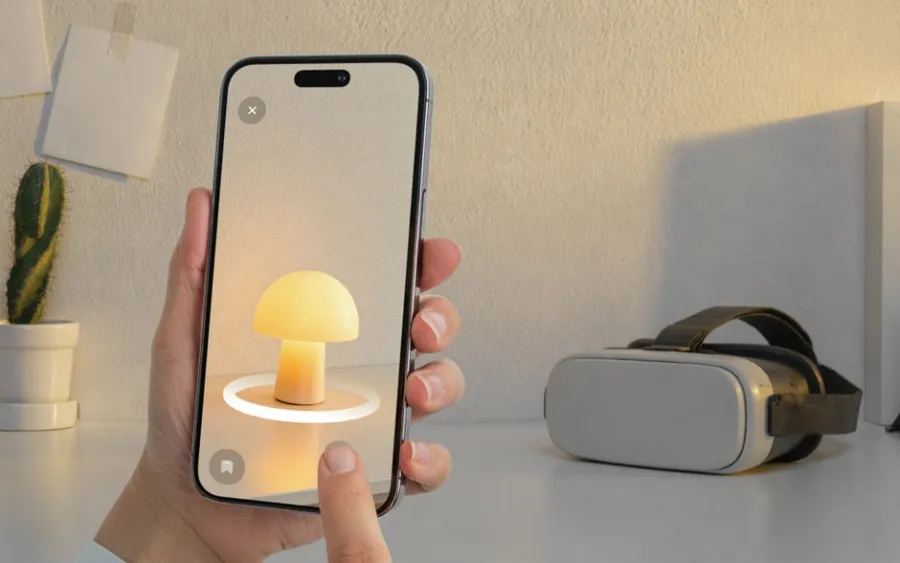
Most people experience markerless AR through their phones. A markerless augmented reality system for mobile devices uses built-in cameras, gyroscopes, and depth sensors to map the surrounding environment.
This is what enables popular markerless AR app experiences like:
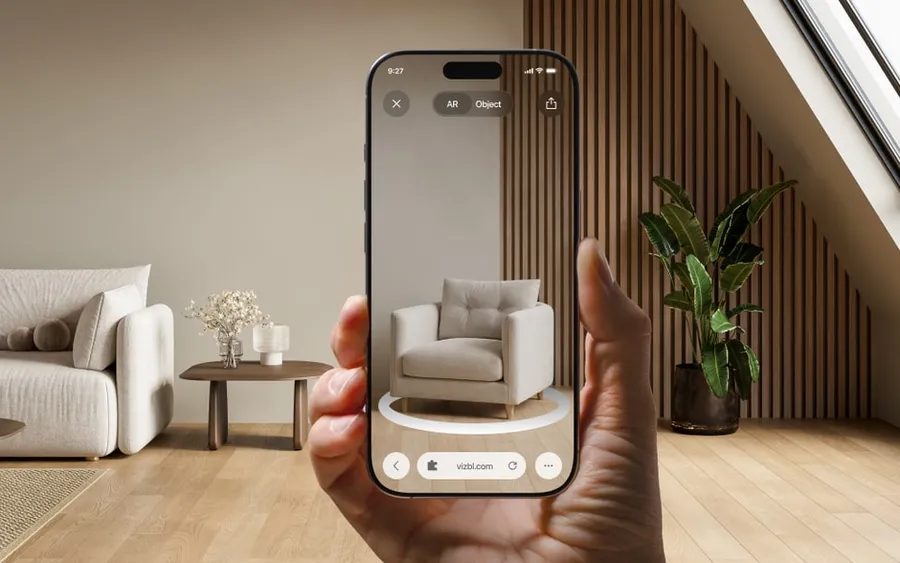
- Placing furniture in your living room
- Trying on shoes or glasses virtually
- Interactive educational simulations
Markerless Web AR: AR Without Downloads
One of the most exciting developments is markerless web AR.
Also known as markerless ar web or web ar markerless, this approach lets users access AR directly through a browser. No app downloads. No friction.
A markerless AR viewer embedded into a website can launch an AR experience instantly, making it ideal for marketing, ecommerce, and storytelling.
Read Also: Augmented Reality Problems: Between Promise, Frustration, and Real Opportunity
Best Markerless AR Systems and Headsets
As the technology matures, several platforms stand out as the best markerless AR system solutions.
On mobile, Apple ARKit and Google ARCore dominate. For head-mounted experiences, professionals often look to the best markerless AR headset, such as Microsoft HoloLens or Apple Vision Pro.
These platforms combine spatial mapping, AI perception, and advanced tracking to deliver what many consider the best markerless AR experiences available today.
Markerless Augmented Reality Tutorials and Learning
For developers and designers, learning markerless AR can feel overwhelming at first. Fortunately, there are plenty of learning resources available.
A good markerless augmented reality tutorial or augmented reality markerless tutorial usually starts with environmental detection and tracking fundamentals. From there, learners move on to:
- Markerless AR tutorial projects
- How to create markerless augmented reality
- Processing augmented reality markerless
- Understanding AR features marker markerless
Markerless AR Examples in the Real World
Seeing the technology in action makes everything click.
Common markerless augmented reality examples include:
- Virtual home design tools
- Interactive museum exhibits
- Industrial training simulations
- Location-aware games
A simple markerless AR example might involve placing a virtual character on your floor and walking around it as if it were physically present.
Markerless Augmented Reality Algorithms
Behind every smooth experience is a complex system of algorithms.
A typical markerless augmented reality algorithm example involves:
- Feature detection
- Environmental mapping
- Motion estimation
- Depth analysis
These algorithms power augmented reality markerless tracking and ensure virtual objects behave consistently in physical space.
The Future of Markerless Augmented Reality
As AI improves and devices become more powerful, markerless tracking for augmented reality will continue to evolve. Learning-based systems will become faster, smarter, and more human-like in how they understand the world.
Markerless AR is no longer experimental—it is becoming the standard.
Final Thoughts
Markerless AR represents a fundamental shift in how digital content blends with reality. By removing markers, markerless based AR creates experiences that feel natural, intuitive, and immersive.
Whether you’re exploring markerless web AR, building a markerless AR app, or learning through a markerless augmented reality tutorial, one thing is clear: markerless technology is shaping the future of augmented reality.
And this time, the digital world doesn’t need a marker to find its place.