3D & AR for Lighting Manufacturers

Bring your lighting catalog into your customers' homes

Shoppers see every fixture at true scale in AR — right from your product pages. No app for shoppers. No development work for you.

+44%

add-to-cart after 3D viewing

2 in 3

Shoppers are less likely to return products

21%

increase in time on page after adding 3D models

70%

higher purchase confidence with AR
Personal demo

Get a free demo with your actual products

We'll set it up with products from your store — so you see exactly what your shoppers will experience. 20 minutes, no pitch deck.
True scale

Help shoppers choose the right size

Show every fixture at its true size
Product photos and listed dimensions aren't enough for shoppers to judge how a fixture will look in their space. Measurements tell you the numbers, not the look — which is how shoppers end up with a chandelier that's too large or a sconce that's too small.
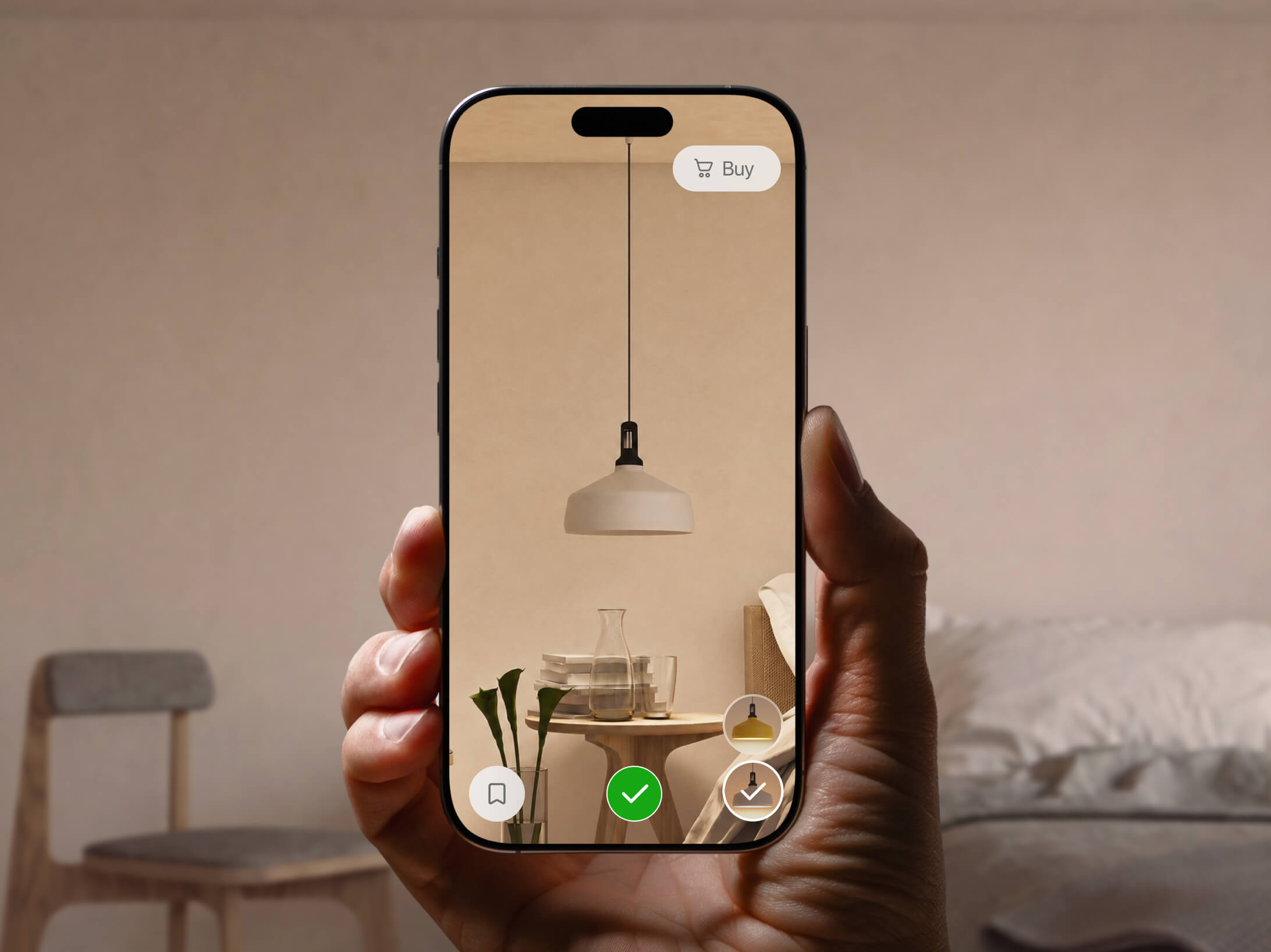
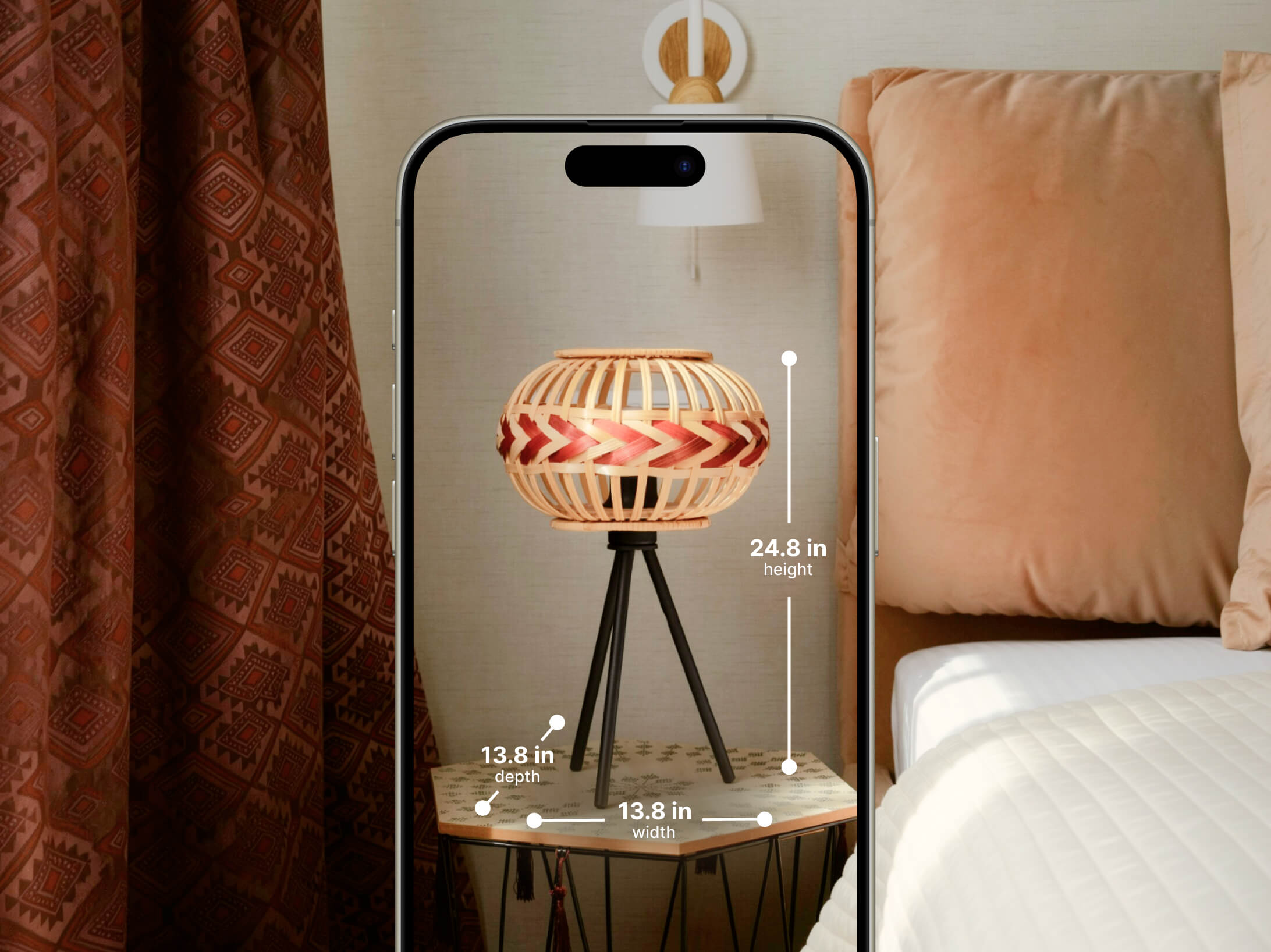
With Vizbl, shoppers can check the size before they order. Chandeliers, wall sconces, and floor lamps appear in AR at true 1:1 scale with ±5 mm accuracy. Shoppers point their phone at the spot where the fixture will go and see it in their own space — no measuring, no mental math, no guessing whether it will fit.
Surface detection

Surface & object recognition

Place every fixture on the right surface
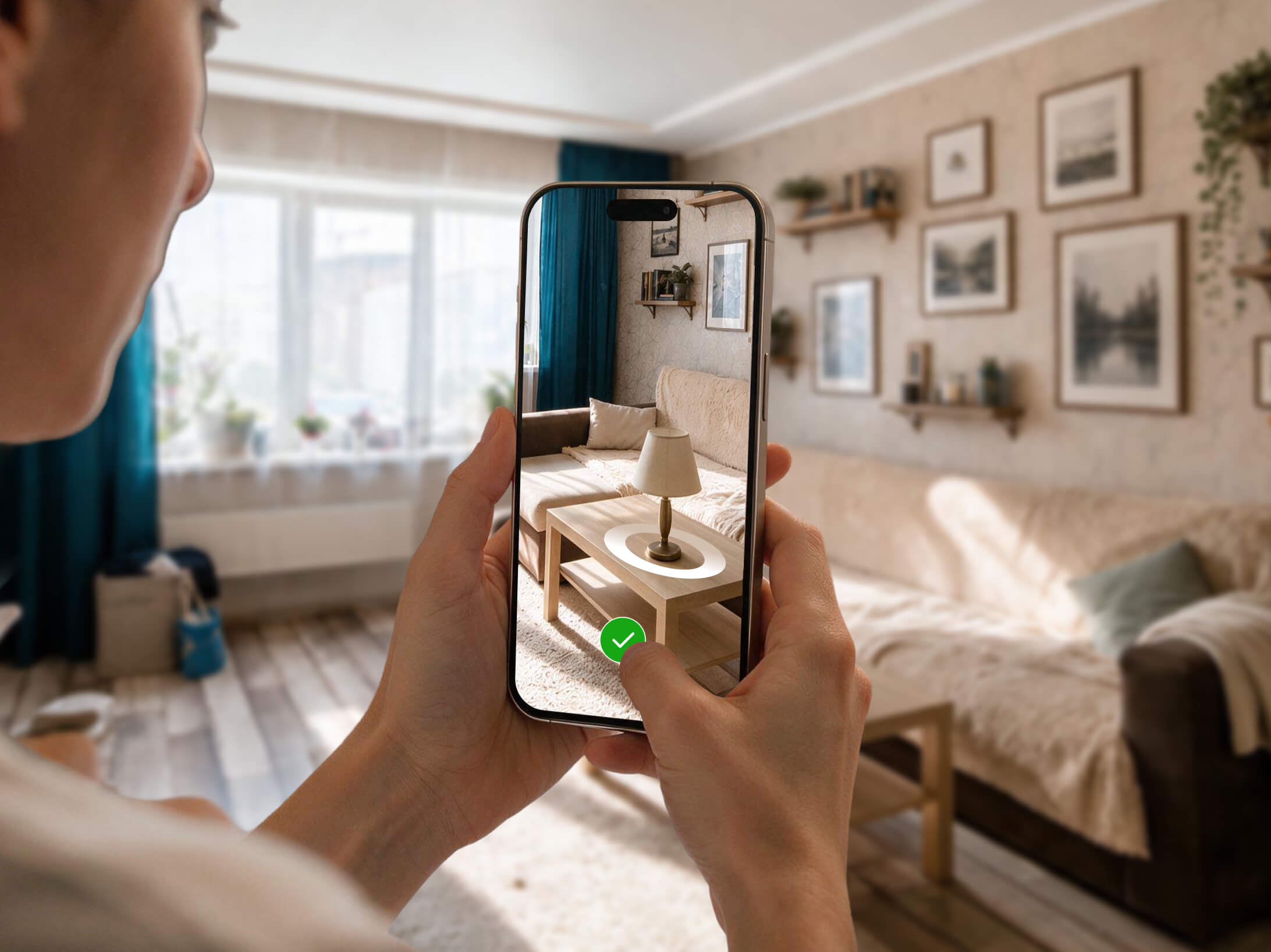
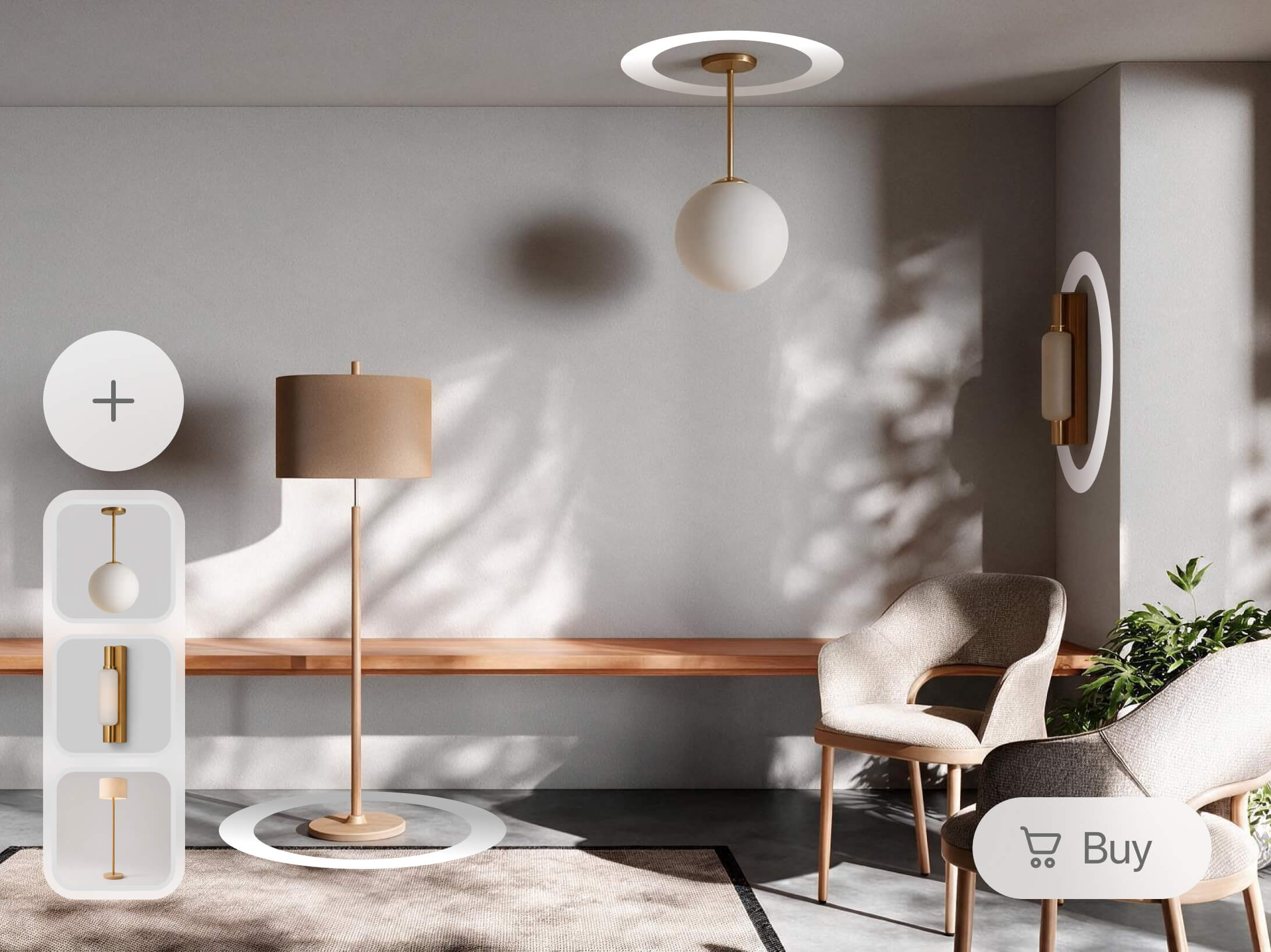
Vizbl automatically detects surfaces in the camera view and places each fixture on the correct surface. On most modern devices, this happens with no manual adjustment. A pendant light appears on the ceiling, a wall light on the wall, and a floor lamp on the floor.

Vizbl also recognizes individual objects, not just room surfaces. A virtual table lamp can sit on a real table, instead of dropping to the floor below.
Configurator

Let shoppers explore every option

Show every fixture variant in 3D and AR
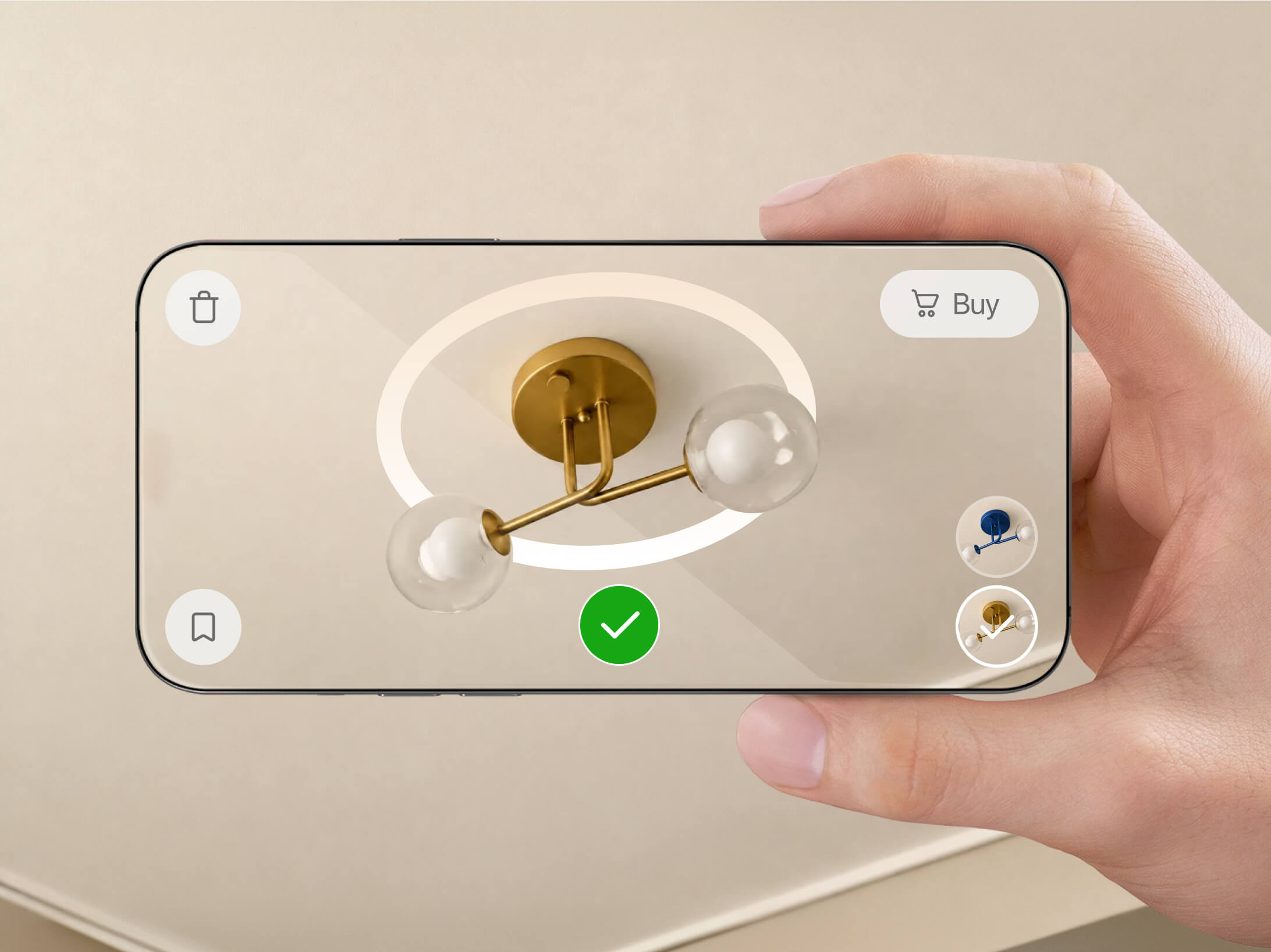
With the 3D configurator, shoppers can compare colors, materials, sizes, and finishes — switching between them in real time. Whatever they configure carries straight into AR, and they can keep adjusting it while the fixture is placed in their space.
Multi-AR

Visualize the full lighting setup

Show multiple fixtures in the same space
Multi-AR lets shoppers add several fixtures to a single AR scene and see them together in their space. They can arrange several fixtures, compare options, and see how the fixtures work together and fit the room — before committing to a purchase or an install.

Easy integration
with website builders

Got questions?

What are the benefits of AR lighting visualization compared to traditional product photography?
Ecommerce Webflow Template -  Poppins
Photos show what a lighting fixture looks like. AR helps shoppers understand whether it will actually work in their space.

A chandelier may look perfectly proportioned on a product page and still feel too large above a real dining table. A pendant may look right on its own but too small for a high ceiling. With AR, shoppers can place the fixture in their room, see it at true scale, and judge it in context before ordering.

That’s the difference: photos answer “what does it look like?” — AR helps answer “will it work in my space?”
How much does AR visualization software for lighting typically cost?
Ecommerce Webflow Template -  Poppins
It depends on how you build it. Developing AR in-house means preparing and hosting 3D models, integrating the experience into your website, and maintaining the underlying technology.

Vizbl provides that infrastructure as a ready-to-integrate solution. Instead of developing an AR platform from scratch, you add your lighting catalog and integrate the experience into your existing product pages.
How can AR visualization improve conversion rates for lighting products?
Ecommerce Webflow Template -  Poppins
Lighting is difficult to judge from product photos alone. Shoppers need to understand the fixture’s size, placement, finish, and relationship to the rest of the room before they feel confident buying it.

AR removes part of that uncertainty by letting shoppers see the fixture in their own space before purchase and installation. The easier it is to judge whether a product works in context, the easier it is to make a purchase decision.
What types of lighting businesses benefit most from AR visualization?
Ecommerce Webflow Template -  Poppins
AR is especially useful for lighting manufacturers, brands, and retailers whose customers need to evaluate size, placement, or appearance before buying.

It is particularly relevant for catalogs with multiple sizes, finishes, or configurations, and for products that are difficult to evaluate without seeing them in the context of a real room.
How does AR lighting visualization integrate with existing e-commerce platforms?
Ecommerce Webflow Template -  Poppins
Most of the technical work is handled by Vizbl, so you don’t need to build an AR experience from scratch.

The basic setup is simple:
- Create a Vizbl account.
- Upload your 3D models and link them to the relevant products. If you don’t have 3D models yet, Vizbl can create them.
- Configure the features you need, such as product variants or Multi-AR.
- Add the generated integration to your product pages.

After launch, you only need to keep the 3D catalog up to date as your product lineup changes.
What types of lighting fixtures are best suited for AR visualization?
Ecommerce Webflow Template -  Poppins
AR works especially well for fixtures whose scale and placement are difficult to judge from photos alone — including chandeliers, pendant lights, wall sconces, table lamps, and floor lamps.

Vizbl can place products on different surfaces in the room, so shoppers can see ceiling, wall, tabletop, and floor-mounted lighting where it is actually intended to go.
How is AR related to 3D lighting visualization?
Ecommerce Webflow Template -  Poppins
3D visualization and AR use the same product model for different purposes.

A 3D viewer lets shoppers rotate a lighting fixture, zoom in, and inspect its design and finish from different angles. AR takes that model and places it in the shopper’s real environment at actual scale.

Together, they answer two different questions: 3D shows what the fixture looks like; AR shows how it works in the shopper’s space.

Cookies on Vizbl

We use cookies and similar technologies to make this site work, measure traffic and improve your experience. You can opt out of analytics and marketing cookies at any time. View cookies.