· AR · 4 min read
Augmented reality vs 3D modeling: what’s the real difference?
This post explores the differences between augmented reality and 3D modeling, explaining how each technology works and where they are best used. It breaks down the core ideas behind augmented reality vs 3D modeling in simple terms, highlighting real-world examples across industries like retail, education, and manufacturing. The article also clarifies the relationship between 3D vs AR, showing how both technologies often work together to create immersive and practical digital experiences.
If you’ve ever explored new digital technologies, you’ve probably heard the terms augmented reality and 3D modeling used almost interchangeably. They often appear together in conversations about innovation, immersive experiences, and future tech. However, when you really dig into augmented reality vs 3D modeling, you’ll find that they serve very different purposes—even though they work best as a team.
Understanding the difference between 3D vs AR isn’t just for developers or designers. It’s increasingly important for businesses, marketers, educators, and creators who want to choose the right tools for their projects.
Understanding 3D Modeling in Simple Terms
3D modeling is all about creation. It’s the process of building digital objects that exist in three dimensions—height, width, and depth. These models can represent almost anything: a chair, a building, a character, or even an entire virtual city.
Think of 3D modeling as sculpting, but instead of clay, you’re shaping polygons on a computer screen.
What 3D Modeling Is Commonly Used For
- Product design and prototyping
- Architecture and interior visualization
- Movies, animations, and video games
- Engineering and simulations
In the 3D vs AR discussion, 3D modeling comes first. Without 3D models, many AR experiences wouldn’t exist at all.
What Makes Augmented Reality Different?
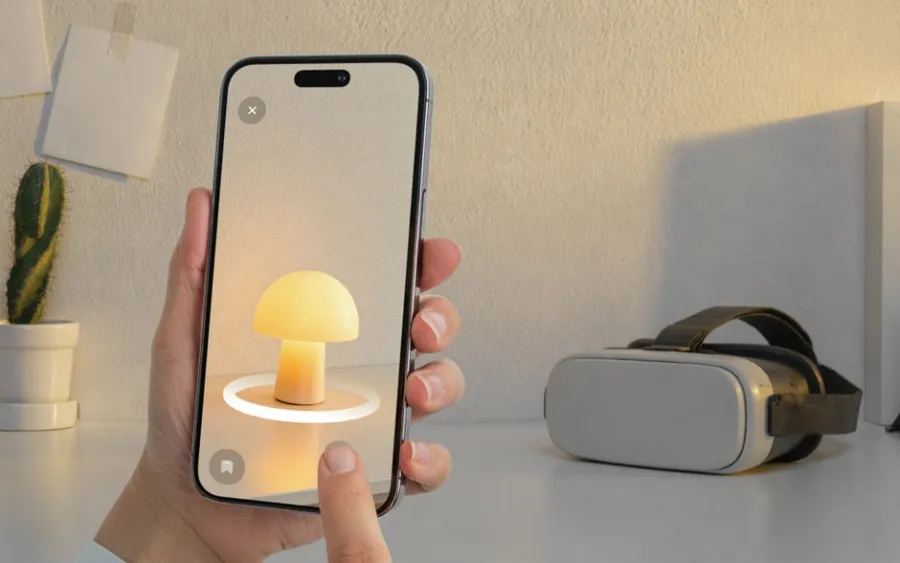
Augmented reality doesn’t focus on creating objects—it focuses on placing them into the real world. AR takes digital content and overlays it onto your physical environment using a camera-enabled device like a smartphone or tablet.
A good way to think about AR is this: it doesn’t replace reality, it enhances it.
Read Also: Augmented Reality Without an App: Why the World Is Finally Ready for WebAR
Everyday Examples of Augmented Reality
- Trying on glasses virtually using your phone
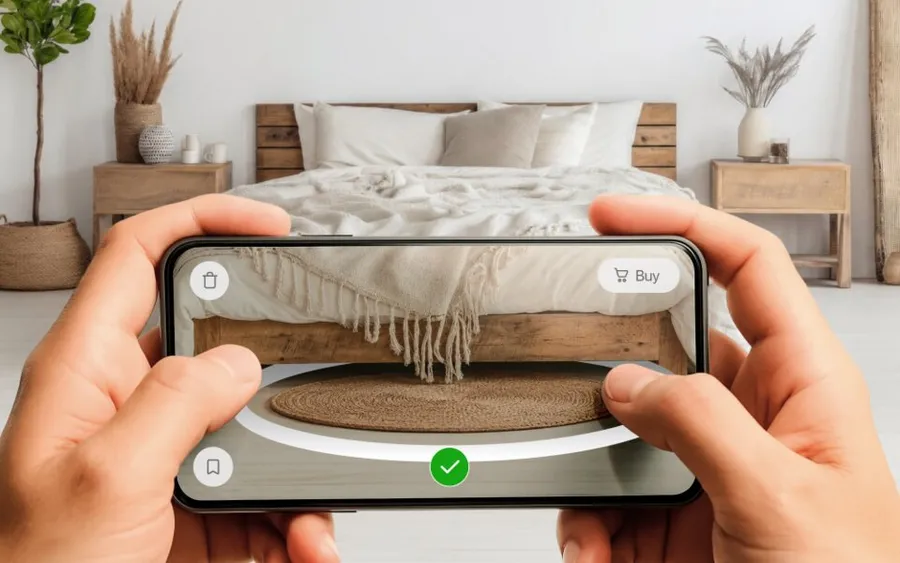
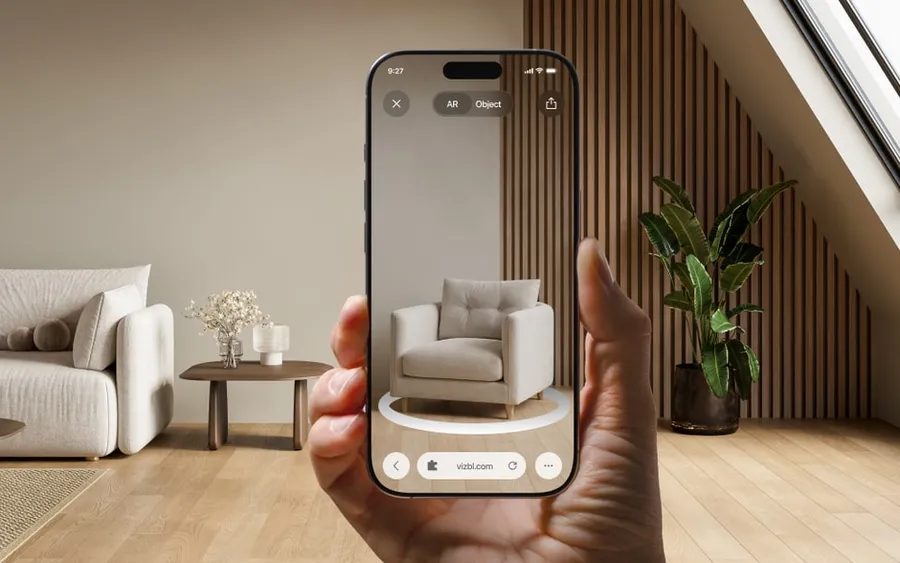
- Seeing how furniture looks in your living room before buying it
- AR navigation directions layered on real streets
- Interactive learning apps that bring textbooks to life
When comparing augmented reality vs 3D modeling, AR is about experience and interaction, while 3D modeling is about design and structure.
Augmented Reality vs 3D Modeling: A Deeper Comparison
At first glance, 3D vs AR might feel like a competition, but it’s more accurate to see them as different stages of the same process.
Key Differences Explained Clearly
- 3D modeling creates digital assets that exist on their own
- Augmented reality places those assets into real-world settings
- 3D models can be viewed on any screen
- AR requires cameras, sensors, and real-time tracking
In short, 3D modeling answers the question: _What does it look like?
_Augmented reality answers: What does it look like in my world, right now?
How 3D Modeling and AR Work Together in Real Life
In most professional projects, the debate over augmented reality vs 3D modeling disappears because both are used together.
Here’s how it typically works:
- A designer creates a detailed 3D model
- The model is optimized for performance
- It’s imported into an AR platform
- Users interact with it in the real world
Real-World Industry Examples
- Retail: A 3D sofa model appears in your living room using AR
- Healthcare: Doctors visualize 3D organs over a patient’s body
- Education: Students explore AR planets built from 3D models
- Manufacturing: Technicians see AR overlays of 3D machinery instructions
This is why the 3D vs AR conversation should focus less on choosing one and more on understanding how they support each other.
Choosing Between 3D vs AR for Your Project
Your choice depends on what you want to achieve.
Choose 3D modeling if your goal is:
- Visual design or concept presentation
- Creating assets for games, films, or simulations
- Detailed product previews without interaction
Choose augmented reality if your goal is:
- Real-world visualization
- User engagement and interaction
- Training, marketing, or hands-on learning
When deciding augmented reality vs 3D modeling, always start with your end user and the experience you want them to have.
Final Thoughts
The comparison of augmented reality vs 3D modeling isn’t about which technology is better—it’s about understanding their roles. 3D modeling builds the digital world, while augmented reality brings that world into ours.
Instead of framing it as 3D vs AR, the future lies in using both together to create experiences that feel intuitive, immersive, and genuinely useful.
As technology continues to evolve, the strongest digital experiences will come from creators who understand not just how to build 3D content, but how to place it seamlessly into real life through augmented reality.