· AR · 5 min read
Benefits of AR for ecommerce: when the customer is certain
Photos and videos used to be enough. Increasingly, they’re not.
When someone is picking out a sofa, new tile, or flooring for their living room — they don’t just want to see the product. They want to know how it’ll look in their space. A great product photo doesn’t answer that question. AR does.
By letting shoppers place a 3D version of your product in their actual room through their phone, AR moves shoppers from passive browsing to active buying. Here’s a look at the main benefits of AR for ecommerce — and how it removes the doubts that usually stand between a customer and the checkout button.
The biggest barrier to online purchases isn’t price — it’s uncertainty
More than 70% of online shoppers abandon their carts without buying. It’s especially common in furniture, home décor, and finishing materials — categories where uncertainty delays the decision. Customers aren’t uncertain about the cost. They’re uncertain about fit — whether the product will actually work in their space.
And it’s not a cost problem. According to a 2021 study by Deloitte Digital and Snap — one of the largest consumer AR surveys conducted, with 15,000 respondents — 56% of shoppers say AR gives them more confidence in a purchase, and nearly three in four say they’d pay more for a product that offers that level of transparency. The demand is there. Most stores just haven’t acted on it yet.
From product photos to seeing it in your space
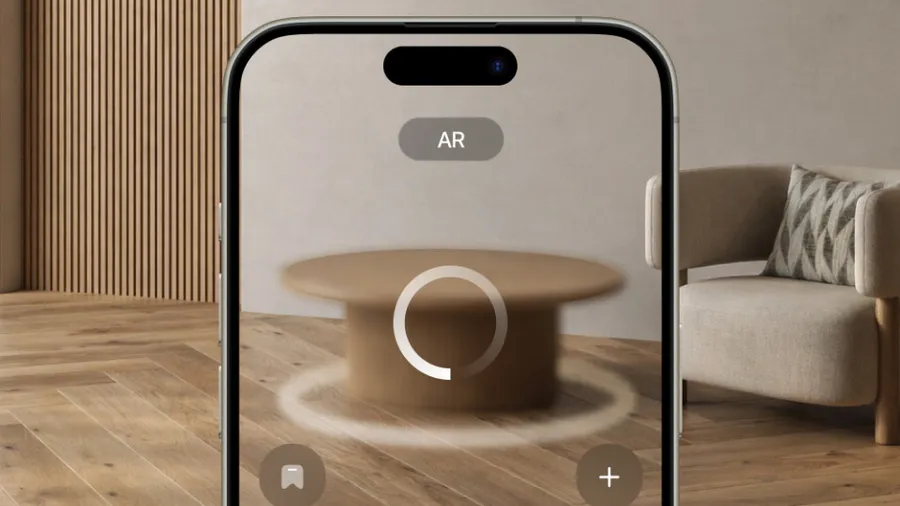
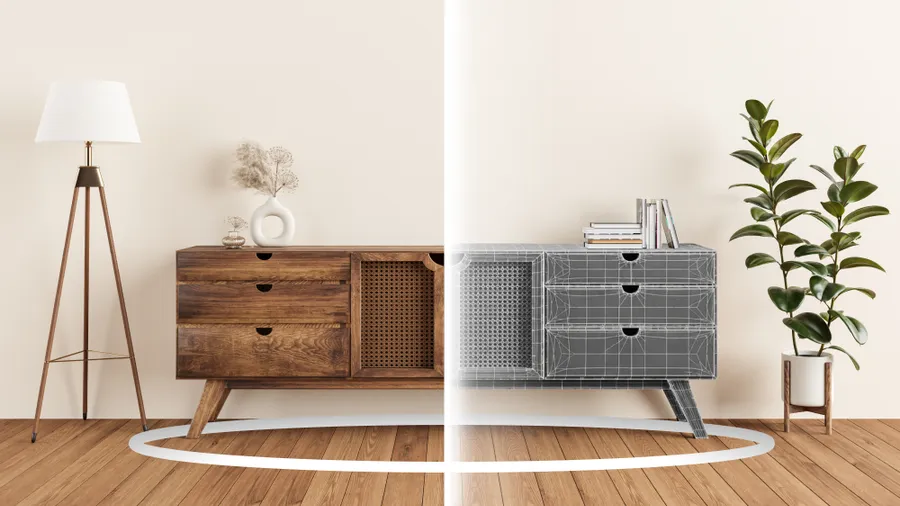
Augmented reality lets you place a virtual object into a real environment through your phone — and in ecommerce, that means showing shoppers an accurate 3D version of your product placed in their home, office, or outdoor space.
One of the key benefits of AR is that it lets customers actually verify — not just see. Will it fit the room? Does it work with the existing décor? How does it look next to the flooring? These are exactly the questions that prevent conversion, and AR is the only format that actually answers them.
It’s especially valuable in categories where the risk of a mismatch is high:
- Furniture and interior décor
- Wall coverings and finishes
- Flooring
- Lighting
- Large appliances
- Indoor and garden plants
- Outdoor décor
- Kids’ play sets
- Landscaping and garden design
AR closes the gap between shopping online and shopping in person. Here’s what any customer can do before hitting “buy”:
- Place a sofa in their living room and see whether it’s too bulky, or whether it works with the rest of the room.
- Check how a pool, modular sauna, or kids’ play sets would actually look in their backyard — to scale. Some products even let you step inside and look around.
- Virtually lay new laminate, tile, or porcelain across their floor.
- Hang a painting, poster, or light fixture on their wall to check the scale and how it fits the space.
The “what if it doesn’t work?” question disappears — because by the time they check out, they’ve already seen it in their home.
After trying it in AR, letting go is harder than you’d think
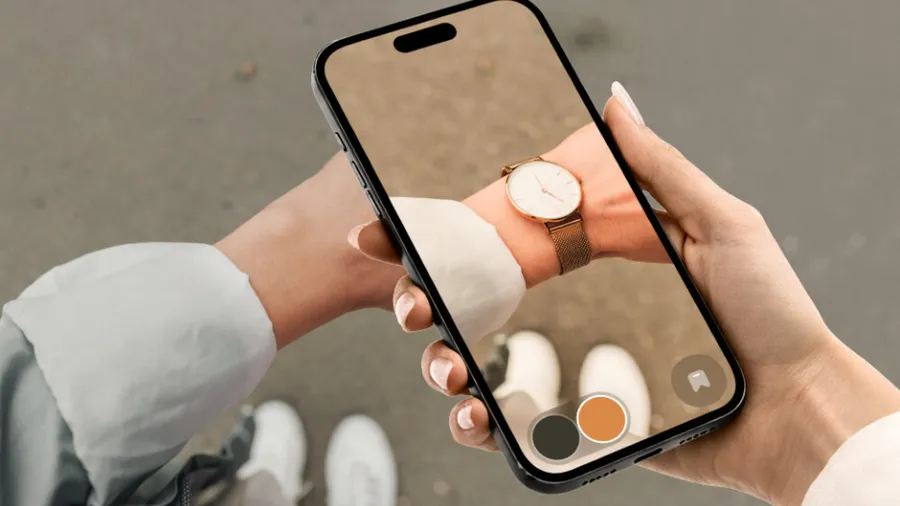
AR doesn’t just help customers visualize a product — it changes how they feel about it. Whether it’s a watch tried on in a store or a sofa placed virtually in your living room, the effect is the same — your brain starts treating it as yours.
Researchers call this the endowment effect — the moment we hold something, or place it in our space, we start to value it more. The guesswork disappears: no more mentally scaling the sofa, no more wondering if the lamp will work. The customer sees it in context, and that makes it feel real.
All of this happens in 10–15 seconds of AR interaction — before any money changes hands. When the object disappears from the screen, there’s a subtle sense of loss — and that’s the moment interest becomes intent.
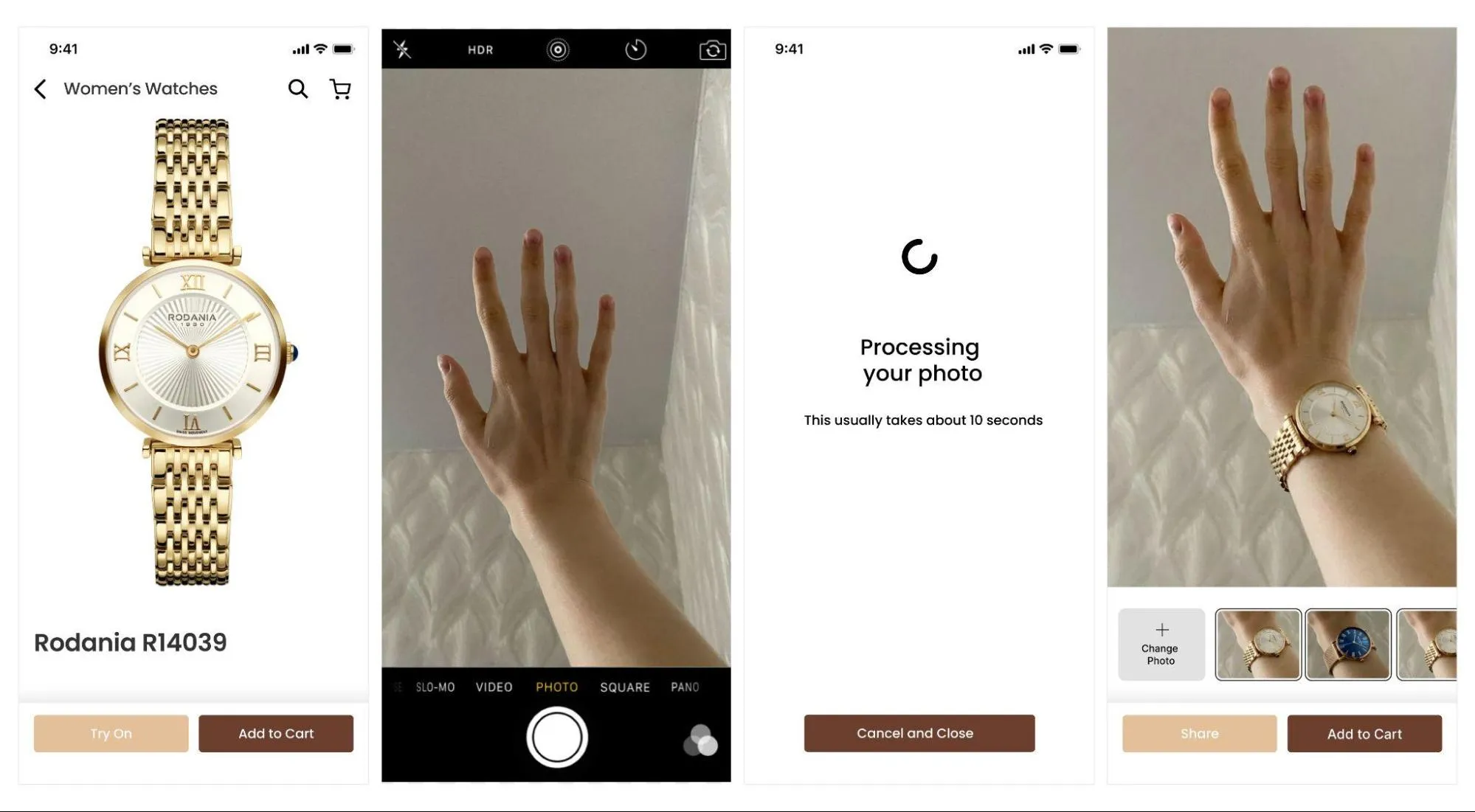
VIZBL prototype: photo-based virtual try-on. The customers upload a picture of their hands and see how the jewelry looks on them
Full product information — no showroom required
AR lets customers explore variations before they buy: swap materials, switch colors, change individual elements — all without touching a physical sample.
Say a store has a beige sofa in every photo, but the customer wants it in gray. With AR, they can see the gray version at actual size, with the right texture, sitting in their own room. They’re not ordering blind — they’re confirming what they’ve already seen work.
That shift — from uncertainty to informed choice — is where conversion happens. The benefits of AR show up clearly in the numbers: according to Shopify, conversion lifts of up to 94% have been recorded in some product categories.
Why AR is worth adding to your store
We’re all making decisions under uncertainty — and the brands that help customers cut through it are the ones that stand out.
In a crowded market, AR is a signal: this store invests in the customer experience, not just the product listing. That builds trust. And trust compounds — fewer returns, less churn, more repeat purchases.