· AR · 4 min read
Marker vs markerless augmented reality: understanding the real difference
Marker-based and markerless augmented reality differ mainly in how users interact with digital content in the real world. Marker-based AR relies on predefined visual triggers like QR codes or images, making it structured, predictable, and well-suited for controlled environments such as manuals, education, or exhibitions where precise placement matters. Markerless AR, by contrast, uses sensors, AI, and computer vision to understand surfaces, faces, motion, and space without physical markers, creating more natural, immersive, and intuitive experiences. This flexibility powers modern use cases like social media filters, virtual try-ons, gaming, fitness, and motion tracking. While marker-based AR remains simpler and reliable for specific tasks, advances in hardware and AI have made markerless AR the preferred choice for scalable, interactive, and human-centered experiences, reflecting the broader shift toward more seamless and intuitive technology.
Augmented Reality is no longer a futuristic concept—it’s something we interact with daily, whether through social media filters, virtual try-ons, navigation apps, or immersive learning tools. But behind every AR experience lies a fundamental technical choice: marker-based AR or markerless AR.
To truly understand marker vs markerless augmented reality, we need to move beyond simple definitions and look at how each approach feels in real-world use, where it performs best, and why markerless solutions are increasingly taking the spotlight.
Marker-Based Augmented Reality: Structured and Reliable
Marker-based augmented reality was one of the earliest AR technologies to gain widespread adoption. It works by recognizing a specific visual reference—called a marker—and then displaying digital content on top of it.
These markers can be:
- QR codes
- Printed images
- Logos
- High-contrast patterns
Once the camera detects the marker, the AR experience begins.
What Marker-Based AR Feels Like
Marker-based AR is predictable. You know exactly where the content will appear and how it will behave. This makes it ideal for situations where precision matters more than freedom.
For example:
- Scanning a product box to see instructions
- Viewing educational diagrams in textbooks
- Museum exhibits with fixed information points
In many ways, marker-based AR feels like following instructions—you point the camera, find the marker, and the experience activates.
Read Also: AR Without QR Code: A More Natural Way to Experience Augmented Reality
Markerless Augmented Reality: Natural and Immersive
Markerless augmented reality removes the need for physical triggers altogether. Instead of relying on markers, it understands the environment itself using sensors, AI, and computer vision.
Markerless AR can recognize:
- Flat surfaces like floors and tables
- Faces and facial expressions
- Body movement and gestures
- Real-world depth and spatial layout
This is where AR starts to feel magical rather than mechanical.
What Markerless AR Feels Like
Markerless AR feels intuitive. You open an app, move your phone, and digital objects appear naturally within your space. There’s no need to “hunt” for a marker or print anything beforehand.
This freedom is why markerless AR dominates:
- Mobile gaming
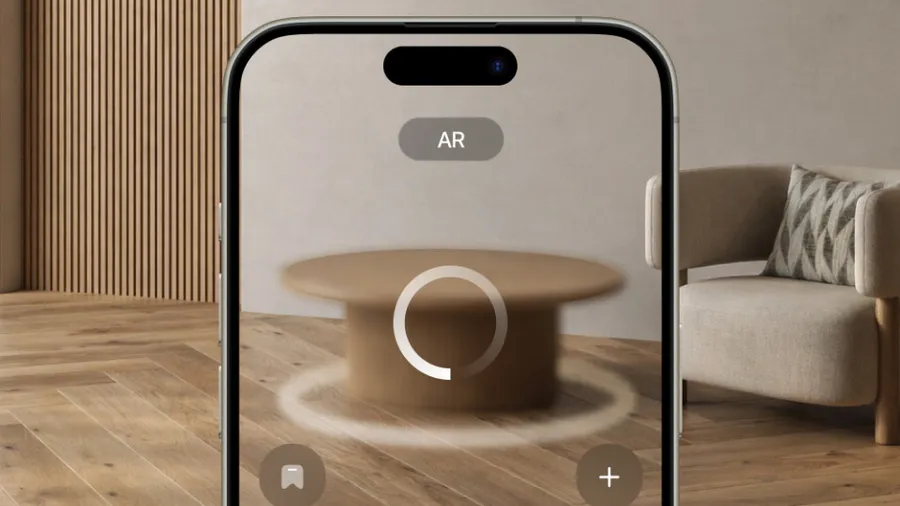
- Virtual furniture placement
- Social media filters
- Fitness and training apps
Marker Based vs Markerless AR: A Practical Comparison
When comparing marker based vs markerless AR, the biggest difference is control versus flexibility.
Marker-based AR works best in controlled environments. It’s dependable and easier to develop, but it limits how users interact with content.
Markerless AR, on the other hand, adapts to the user. It understands the world as it is, which creates more immersive and personalized experiences—but at the cost of higher technical complexity.
In short:
- Marker-based AR tells users where to look
- Markerless AR lets users explore freely
Augmented Reality Marker vs Markerless Face Experiences
Face-based AR clearly shows how far markerless technology has come.
Marker-Based Face AR
In early experiments, face AR required reference images or printed markers. The experience was stiff, unnatural, and rarely practical for real users.
Markerless Face AR
Modern face AR doesn’t need anything extra. It detects facial landmarks—eyes, nose, mouth—and tracks expressions in real time.
This makes augmented reality marker vs markerless face a one-sided comparison. Markerless face AR enables:
- Beauty and makeup try-ons
- Fun and expressive filters
- Virtual masks and avatars
- Real-time emotion tracking
It feels personal, responsive, and alive—something marker-based approaches simply cannot replicate.
Augmented Reality Marker vs Markerless Motion Tracking
Motion tracking is another area where markerless AR shines.
Marker-Based Motion Tracking
Traditional motion AR required physical markers placed on the body or objects. While accurate, it was restrictive and impractical for everyday users.
Markerless Motion Tracking
Markerless motion AR uses cameras and AI models to track body movement naturally—no suits, no stickers, no setup.
This is why augmented reality marker vs markerless motion is such an important comparison today. Markerless motion AR powers:
- Fitness coaching apps
- Dance and movement training
- Interactive games
- Physical therapy tools
Users can move freely, and the system adapts to them, not the other way around.
Why Markerless AR Is Becoming the Standard
While marker-based AR still has its place, the industry is clearly shifting. Markerless AR aligns better with how humans naturally interact with technology—without instructions, barriers, or physical triggers.
Advancements in:
- AI
- Depth sensing
- Mobile hardware
- Computer vision
have made markerless AR more accessible and more reliable than ever before.
Choosing the Right AR Approach
There’s no universal winner in the marker vs markerless augmented reality discussion—it depends on your goal.
Marker-based AR is ideal if you:
- Need consistent, precise placement
- Work in controlled environments
- Want a simpler, lower-cost solution
Markerless AR is the better choice if you:
- Want immersive, natural interaction
- Rely on face or motion tracking
- Aim for modern, scalable experiences
Final Thoughts
The evolution from markers to markerless systems mirrors the broader evolution of technology—from rigid tools to intuitive experiences. As users expect AR to feel seamless and human, markerless solutions are leading the way.
Understanding marker based vs markerless AR, as well as differences in face and motion tracking, helps you make smarter decisions—whether you’re building an app, designing a campaign, or simply exploring what AR can truly offer.