
Augmented Reality in Architectural Construction & Home Design Visualization
Want to visualize different design patterns for your new house? Seek efficient options to reorganize a business space? Or perhaps you are eager to show your clients a realistic construction plan in an interactive way? AR makes this possible. The technology is revolutionizing the architecture industry by delivering advanced solutions for a variety of project needs. This post reveals everything you should know about augmented reality in architectural construction and home design to help you get the most out of it.

Understanding Augmented Reality in Home Design
Augmented reality is a technology that layers digital elements on real-world spaces. While traditional design visualization relies on 2D drawings and images, AR allows you to overlay visuals onto existing home environments using a tablet, phone, or smart glasses to see how they fit your space. Such projects are typically completed with 3D models of different design objects, which encourages better decisions and simplifies modifications.
AR for Home Design Visualization: Use Cases
AR finds applications in both interior and exterior projects, while the most common use cases include:
Virtual furniture placement
Room layout planning
Material and color previews
Lighting simulations
Structural renovations
Space organization
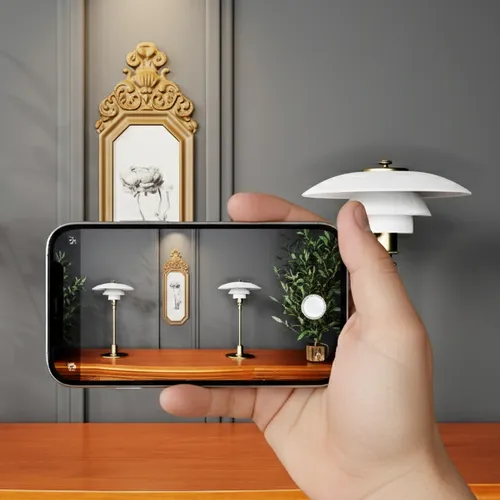
Augmented Reality Architectural Visualization
AR helps architects show their projects interactively and make complex designs easier to understand for non-tech-savvy clients. They transform traditional 2D drawings into 3D models that can be viewed from different angles and customized according to the project’s needs. In such a way, clients, and stakeholders get a realistic view of the job outcome and can give more informative feedback right away. This makes collaboration much more effective by reducing misunderstandings.
Benefits of Augmented Reality in Architectural Construction
Augmented reality may be used during all construction stages, helping teams keep the process as effective as possible. Besides working on the project remotely, they can also view 3D architectural models directly on-site. Below, we have listed the key benefits of augmented reality in architectural construction:
Real-time comparison of planned and built elements
Streamlined collaboration between construction teams
Enhanced operational efficiency
Faster decision-making
Reduced number of construction errors
AR, 3D Models, and User Interaction
Importance of accurate 3D models for AR experiences: accurate 3D models are a prerequisite for effective AR experiences, since they ensure proper planning and representation of design elements.
Real-scale visualization and spatial accuracy: augmented reality is beneficial for evaluating designs in their true size within a variety of physical spaces. In such a way, professionals can identify layout problems and ergonomic concerns before the construction begins.
Interactive design adjustments in real time: augmented reality architectural visualization allows users to interact with designs by changing colors, resizing, and moving objects. So, it becomes easier to experiment with different ideas and reach client-focused results.
Augmented Reality for Retail and Ecommerce
Besides architectural construction, AR proves useful for visualizing home items (e.g., furniture or decor) in real-life environments. By overlaying a 3D object onto their own spaces, customers can make sure that the product suits them well. Ecommerce websites also integrate AR features so that potential buyers can preview their offerings without visiting a land-based store. All this not only makes shopping experiences more immersive and informative but also boosts conversion rates.
Business Advantages of AR for Architectural Visualization
Augmented reality for architectural visualization delivers many advantages to modern businesses, including:
Enhanced client engagement and overall satisfaction
Improved decision-making
Reduced redesign risks
Cost savings on prototyping and revisions
Better collaboration with stakeholders
Competitive advantage in the market
Challenges and Considerations
Even though architectural model augmented reality offers significant benefits, you should still be aware of potential challenges when adopting the technology. Keep in mind the following tips:
Technical requirements for AR implementation
Make sure your devices support the technology, or invest in compatible hardware. Stable internet connectivity also matters.
Accuracy of 3D models
Turn to professional 3D modeling services to get high-quality results in the quickest possible time.
User adoption and learning curve
Choose intuitive AR apps that are easier to navigate, even for beginners.
Future of Augmented Reality in Home Design and Architecture
Constant innovations make the future of augmented reality in architectural construction and home design very promising. AR will continue to evolve, integrating with other powerful technologies like AI and blockchain. We can also expect augmented reality to be widely used with VR, combining virtual walkthroughs with interactive design visualization.
Conclusion
Augmented reality is a great solution to increase design accuracy and enhance the visualization of architectural projects. Adopting this technology can help you provide customer experiences that go beyond expectations, increase operational efficiency, and grow your brand recognition. So, take your first step toward a smart future with Vizbl – your trusted partner in advanced augmented reality solutions.
Start using AR in just a few days
Don’t have 3D models? We’ve got you covered