
AR for Small Businesses: Embrace Innovation to Boost Your Startup
In a world dominated by big brands, launching a startup is not an easy task. Small business owners need to be quite creative to withstand competition and make their offerings more appealing. This is when augmented reality makes a difference. It elevates customer experience and boosts engagement, which allows aspiring entrepreneurs to succeed faster. Before we discover how to implement AR for small businesses, let’s first learn a bit more about the technology and its benefits.

What Is Augmented Reality?
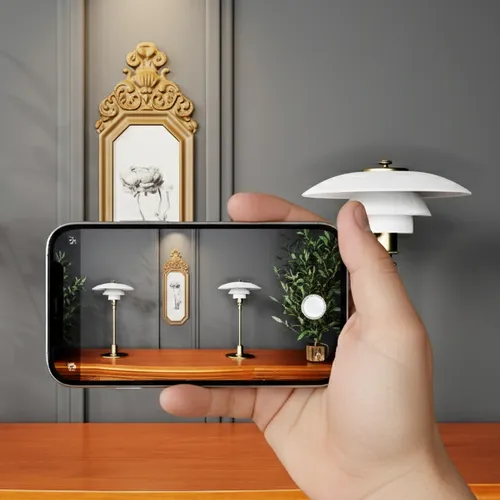
Augmented reality blends the real and digital worlds, driving immersive user experiences. Unlike traditional 2D or 3D content, the technology superimposes virtual objects over physical spaces by using a phone or tablet camera. As a result, you can interact with digital elements as if they were part of the real world. AR works across websites (via a link or QR code), dedicated software apps, and retail spaces (e.g., as smart mirrors or interactive product displays).
Importance of Augmented Reality for Small Businesses
The importance of AR small business solutions cannot be overestimated. As customer expectations grow, entrepreneurs are seeking interactive and personalized ways to draw their attention. With that in mind, brands adopting AR look more successful and professional in the eyes of potential customers. Compared to traditional marketing tools, the technology also proves to be more cost-efficient in the long run, especially for online promotion and product visualization. In addition, AR helps small businesses compete with larger companies by offering innovative customer experiences, driving effective decision-making, and reducing uncertainty before purchase.
Key Benefits of AR for Small Businesses
Here are the key benefits of AR solutions for small businesses that help aspiring entrepreneurs grow their brands:
Augmented reality captures and retains customer attention more effectively than standard videos or images. The overall shopping experience becomes more immersive, fun, and personalized, since users can explore products in a variety of ways (e.g., see how furniture matches their interior design or how clothes fit them). As a result, customers spend more time on a website or in-store, which strengthens the connection with the brand.
Businesses adopting AR present their products through accurate 3D models that can be viewed in real-world settings and customized to specific customer needs. Such realistic previews eliminate guesswork, driving well-informed choices. 70% of customers report feeling more confident in their purchasing decisions if there’s an option to visualize products with AR.
Enhanced customer experience and accurate product visualization cannot help but drive sales. According to the latest statistics, goods, and services integrated with AR show 94% higher conversion rates than those without it. This means that small businesses adopting the technology can generate more sales without increasing marketing expenses.
Use Cases of AR for Small Businesses in Retail and Ecommerce
Augmented reality has many applications in retail and ecommerce, including:
Virtual try-ons
3D product displays in real-world spaces
Furniture and home decor placement previews
Testing beauty items and cosmetics
Product demonstrations using smart displays
Customization previews (e.g., colors or materials)
Size and fit guidance for clothes and footwear
How to Implement AR for Small Businesses
As a novice entrepreneur, you can start small and then gradually scale up the adoption of AR into your business. Here are the steps for implementing the technology:
Choose the right AR approach
Determine your customer needs (e.g., virtual try-ons or 3D product visualization) and choose an AR solution that fits your budget and business strategy.
Partner with a reliable AR provider
Turn to a professional AR provider that can tailor solutions to your business model, be it a web-based service for an ecommerce platform or an interactive display for a physical store.
Promote the AR feature
Once augmented reality for small business is integrated, promote it through your website or social media to attract potential customers. At the same time, disclose its benefits to encourage engagement.
Future of Augmented Reality for Small Businesses
Augmented reality is expected to offer businesses even more immersive and interactive ways to showcase their products in real-world settings. Here are key trends to watch:
- Wide adoption of AR on social media platforms
- AI-powered experiences
- Increased use of AR in marketing campaigns (e.g., gamified promotions and interactive ads)
- Switch to cloud-based AR tools
- Integration with VR and MR
Conclusion
AR encourages business growth by transforming the way novice entrepreneurs engage customers, present their products, and withstand competition in modern markets. If you want to increase conversion rates and strengthen your brand as soon as possible, the technology will help you greatly. The best part? You can start exploring the best AR solutions for small businesses right now – Vizbl makes integration simple and accessible for growing brands.
Start using AR in just a few days
Don’t have 3D models? We’ve got you covered